Quilts pieced from memory, yarn carried across twenty-five years, and drawings built one line at a time.
Stitched, spun & drawn
A small collection of finished work — each piece made by hand, and each one carrying its own story of where the fabric, the yarn, or the idea came from.
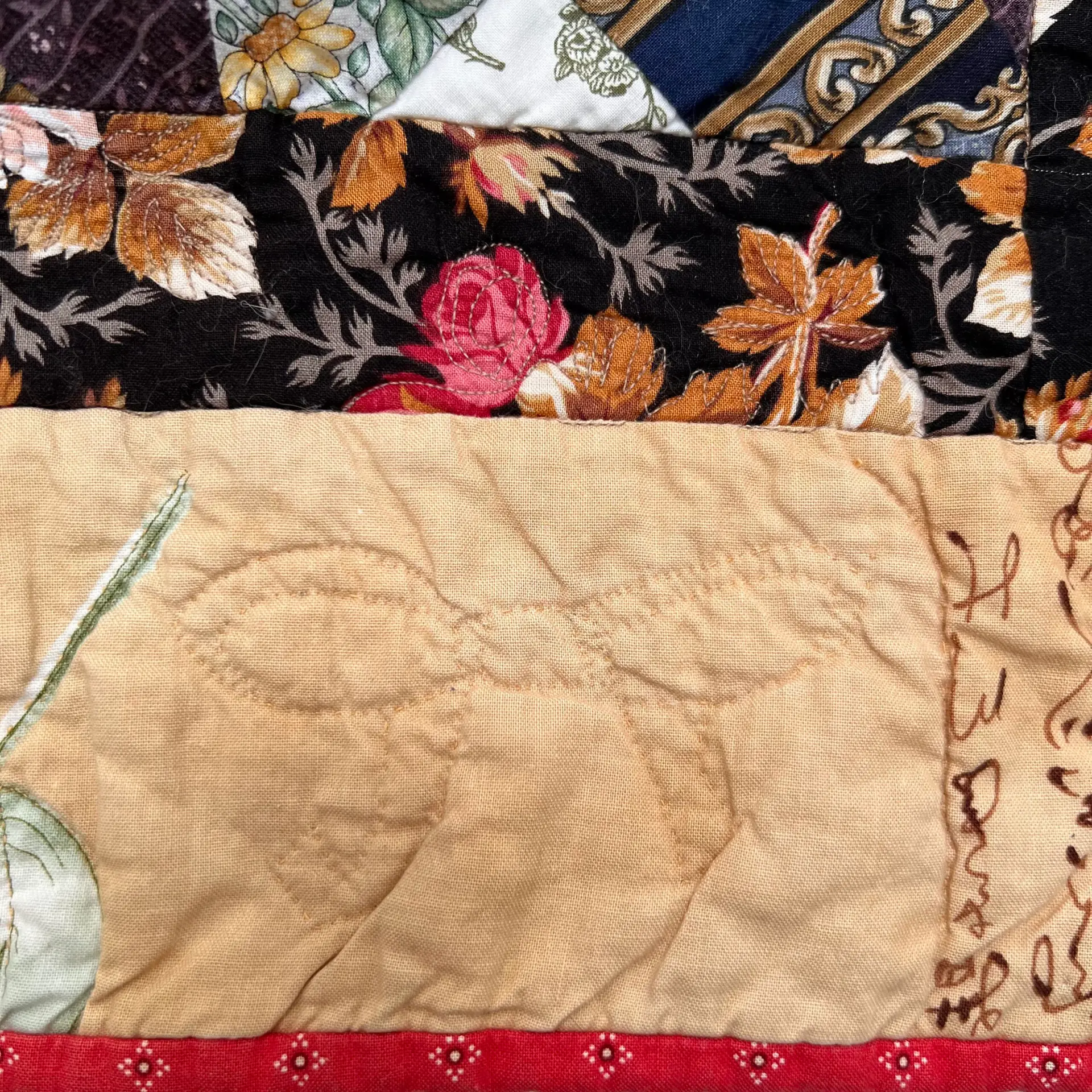
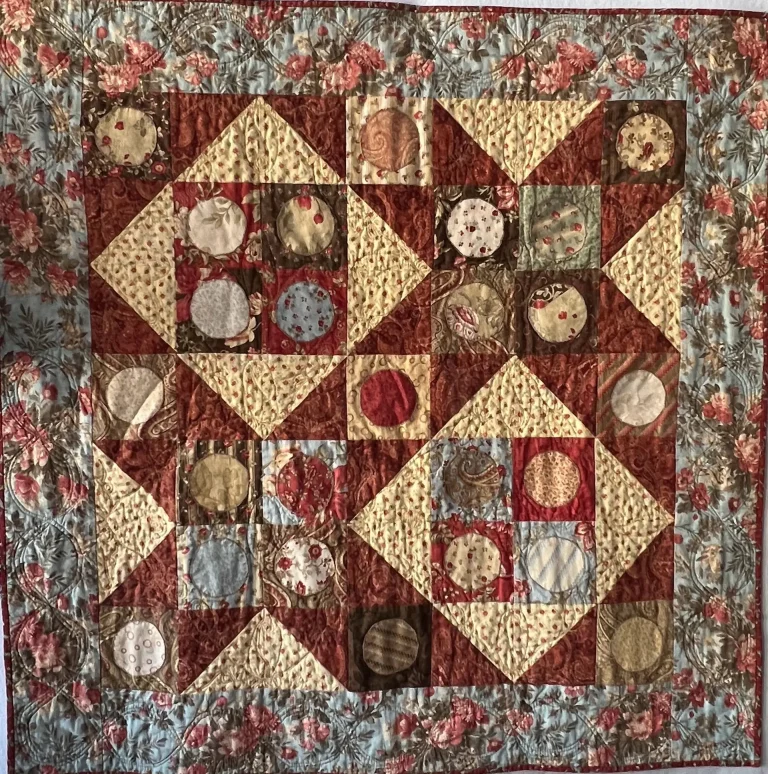
Braid Quilt
This quilt was from the book Jelly Roll Quilts by Pam & Nicky Lintott, entitled Friendship Quilt. Each piece of fabric is a memory from other projects I had sewn.
I worked on this quilt while my mother, who taught me how to sew, was having back surgery at eighty-five. It was on this quilt that I learned hand quilting, taught to me by my mother-in-law. I practiced machine quilting, too. Passion and love went into every braid and stitch.
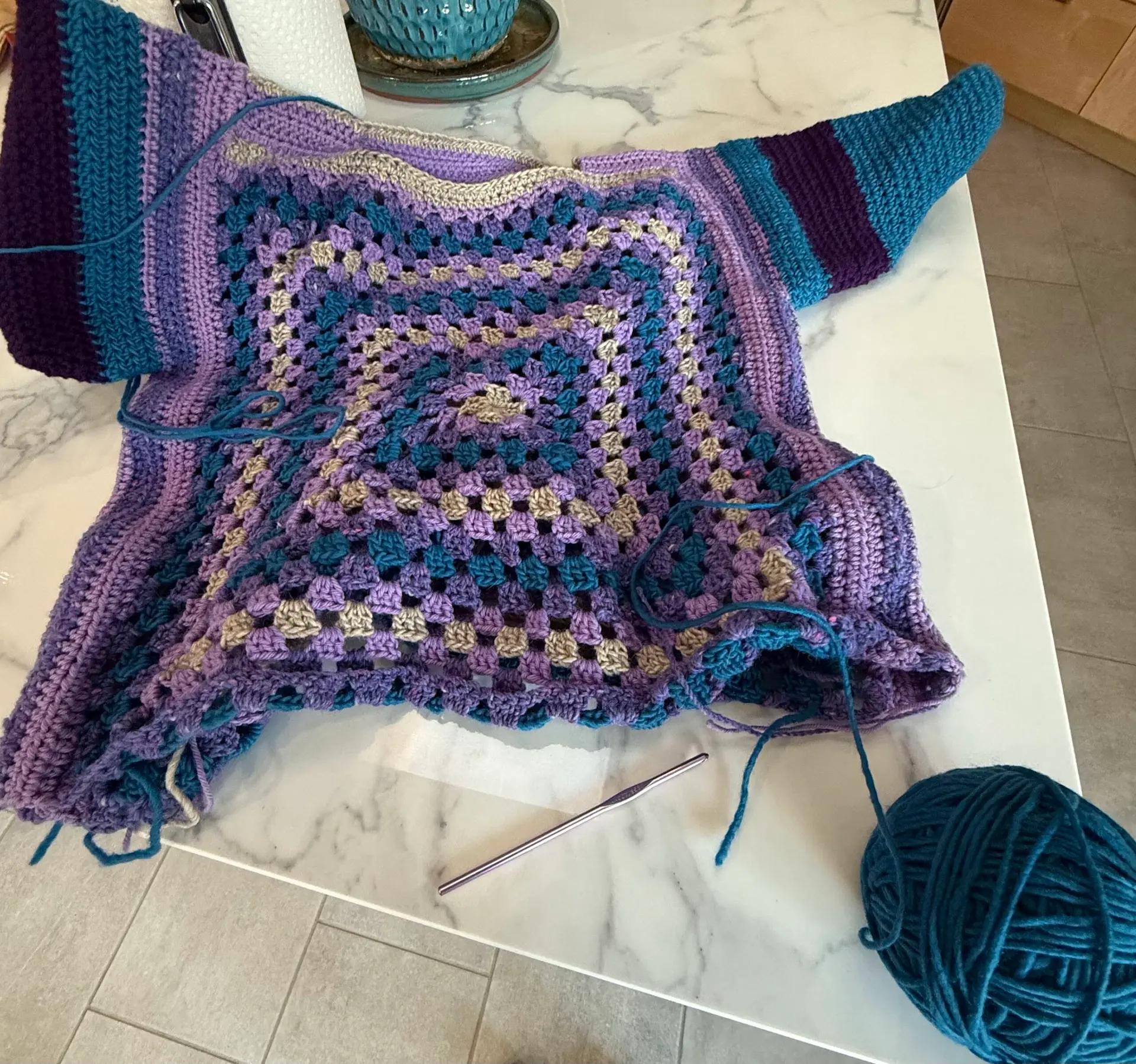
Granny's Square Sweater
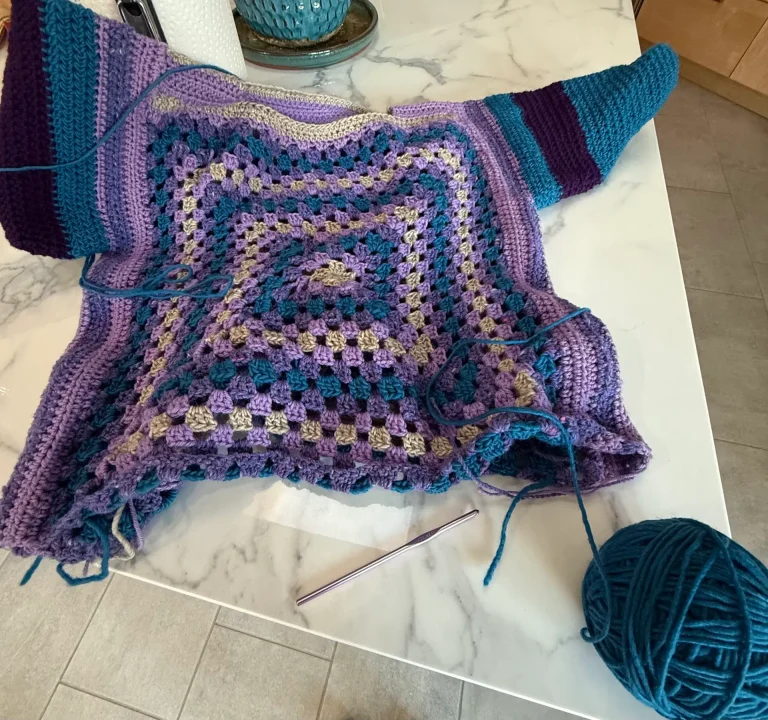
The sweater pictured here came from the book Crochet in No Time: A Simple, Stylish Collection of 52 Quick-Crochet Projects. The publication is no longer available, but you can find used copies on Amazon or eBay.
I received the pattern book circa 2007, placed it on the shelf, and periodically looked at it, promising myself to crochet the sweater one day. This past fall, I deviated from the pattern's yarn suggestion, instead I used what I already had in my stash. I adapted my work for the yarn and the sweater came out lovely and is a joy to wear.
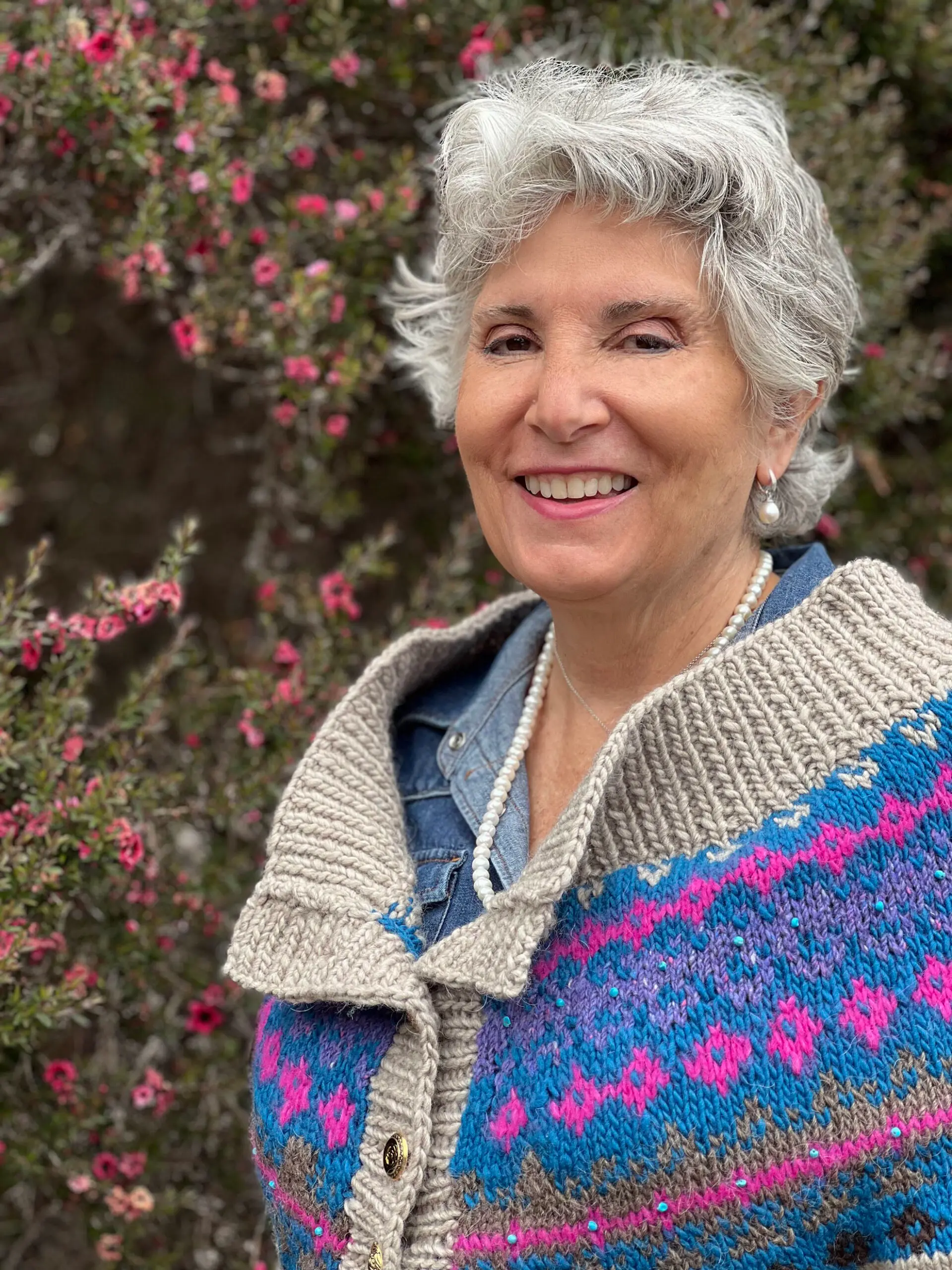
Northern Lights Cardigan
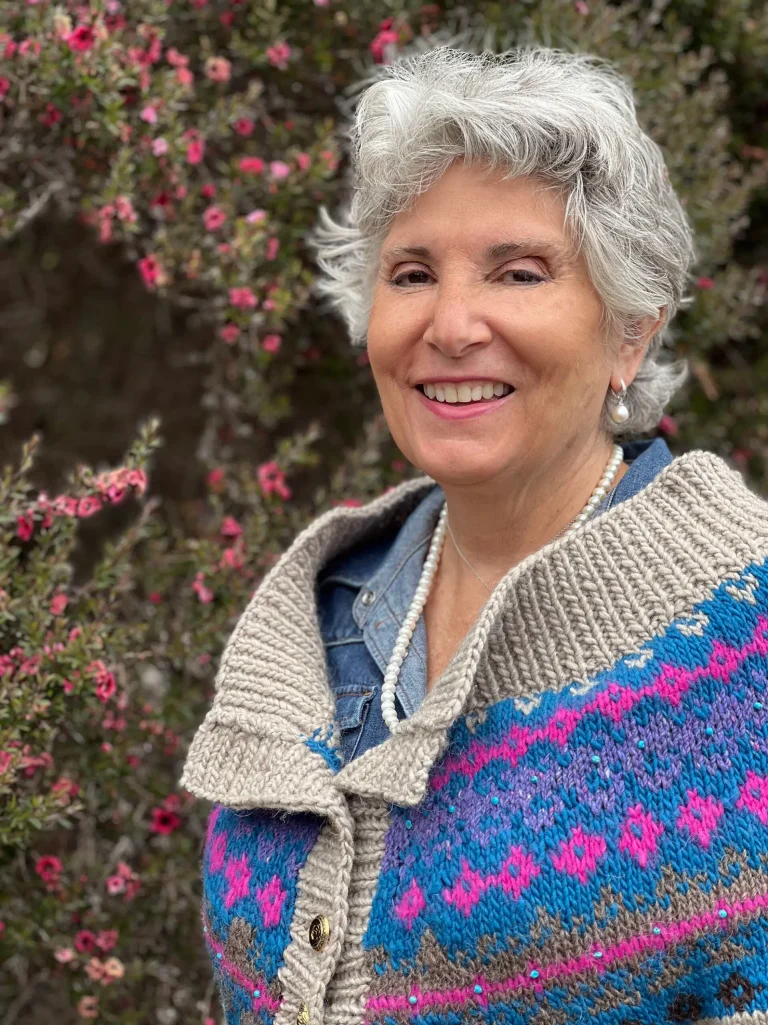
If you are a fan of knitting like I am, you may or may not know Nicky Epstein. If you don't, then you are in for a treat. This design of Nicky's comes from Knitting On Top of the World.
Twenty-five years ago, I went to a Navajo Indian Reservation trading store. While there, I purchased yarn that I thought was real Navajo yarn. I carried this yarn around through several moves and cherished it. Last year, going through my stash wanting to knit this sweater, I took the yarn out to make a gauge swatch and realized it was not Navajo yarn but from Brown Sheep Company in Mitchell, Nebraska. Good thing, too — I needed more to finish the sweater.
Following only Nicky's book, I independently charted my course once more; my colors, her design. Living in Tucson, it makes the perfect winter coat.
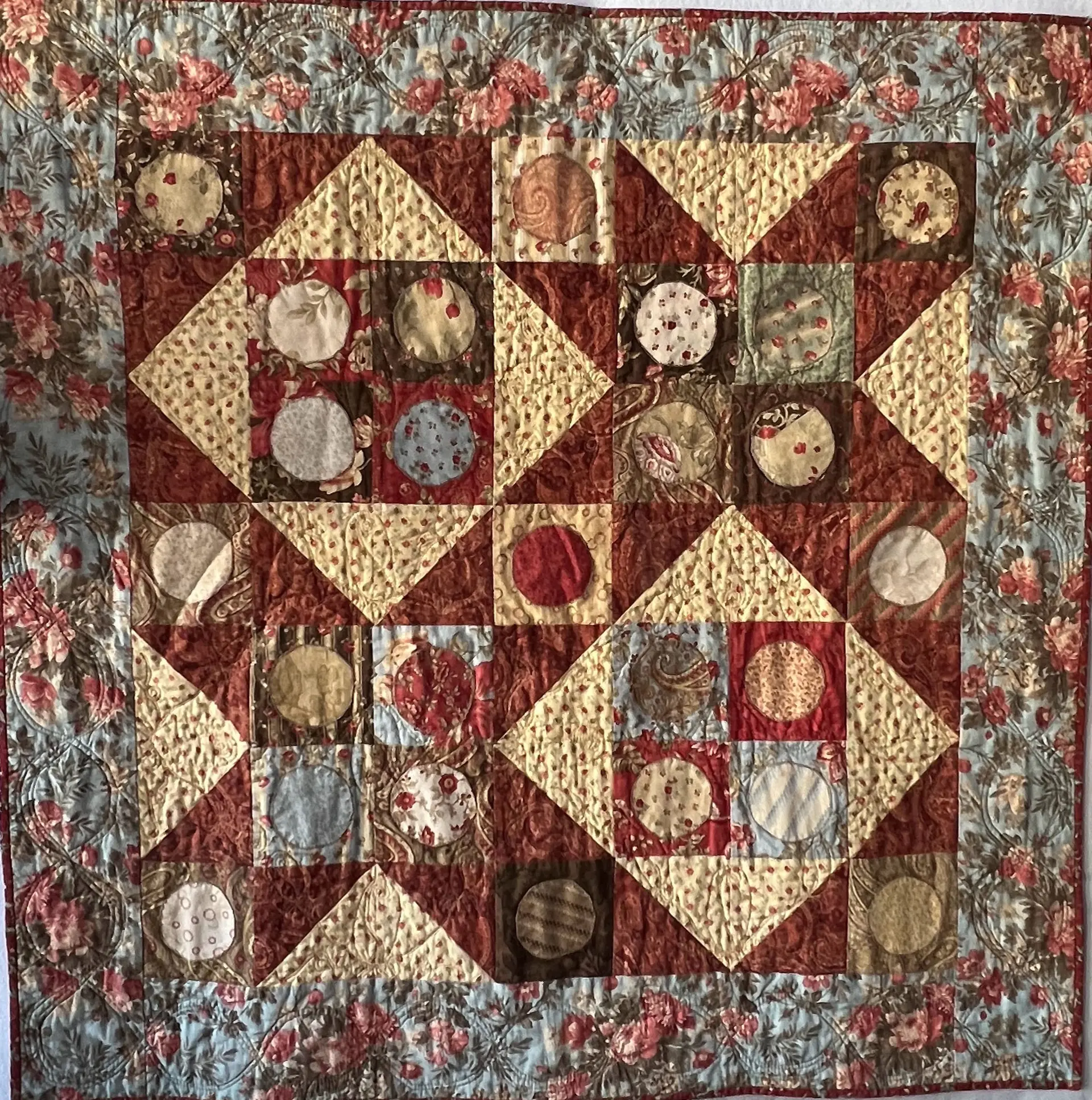
Mother's Last Quilt
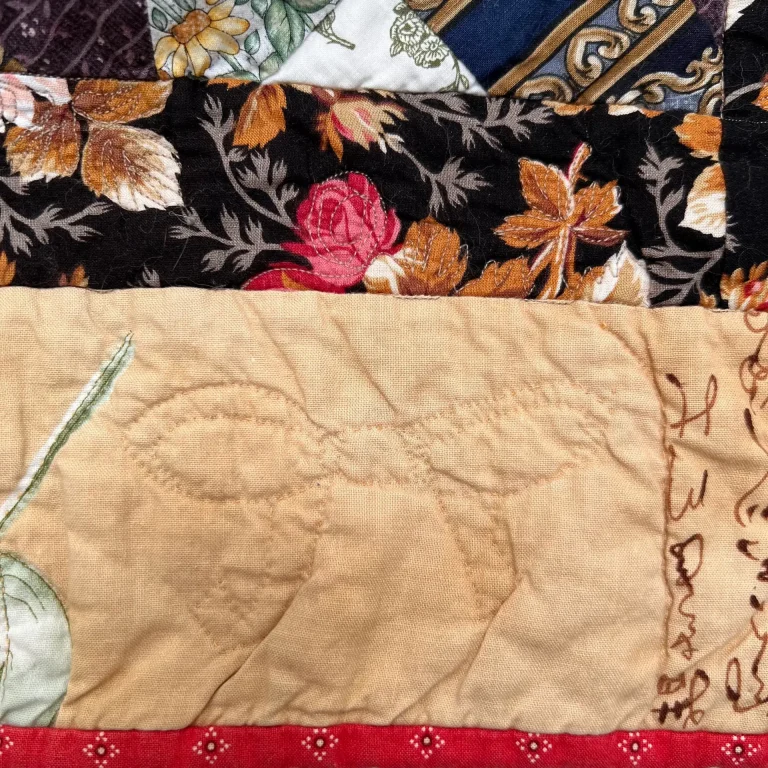
Quilters know inherently that every quilt has a story — the fabric that is from a previous garment, or gifted to you, or a memory of something you made. This quilt is special because it's the last sewing project my mother and I made together. Over the years, we made hundreds of craft and sewing objects together. Here, she made all the squares and then gave it to me to put together and fashion into a quilt.
The most remarkable feature of the quilt is the label. It reads:
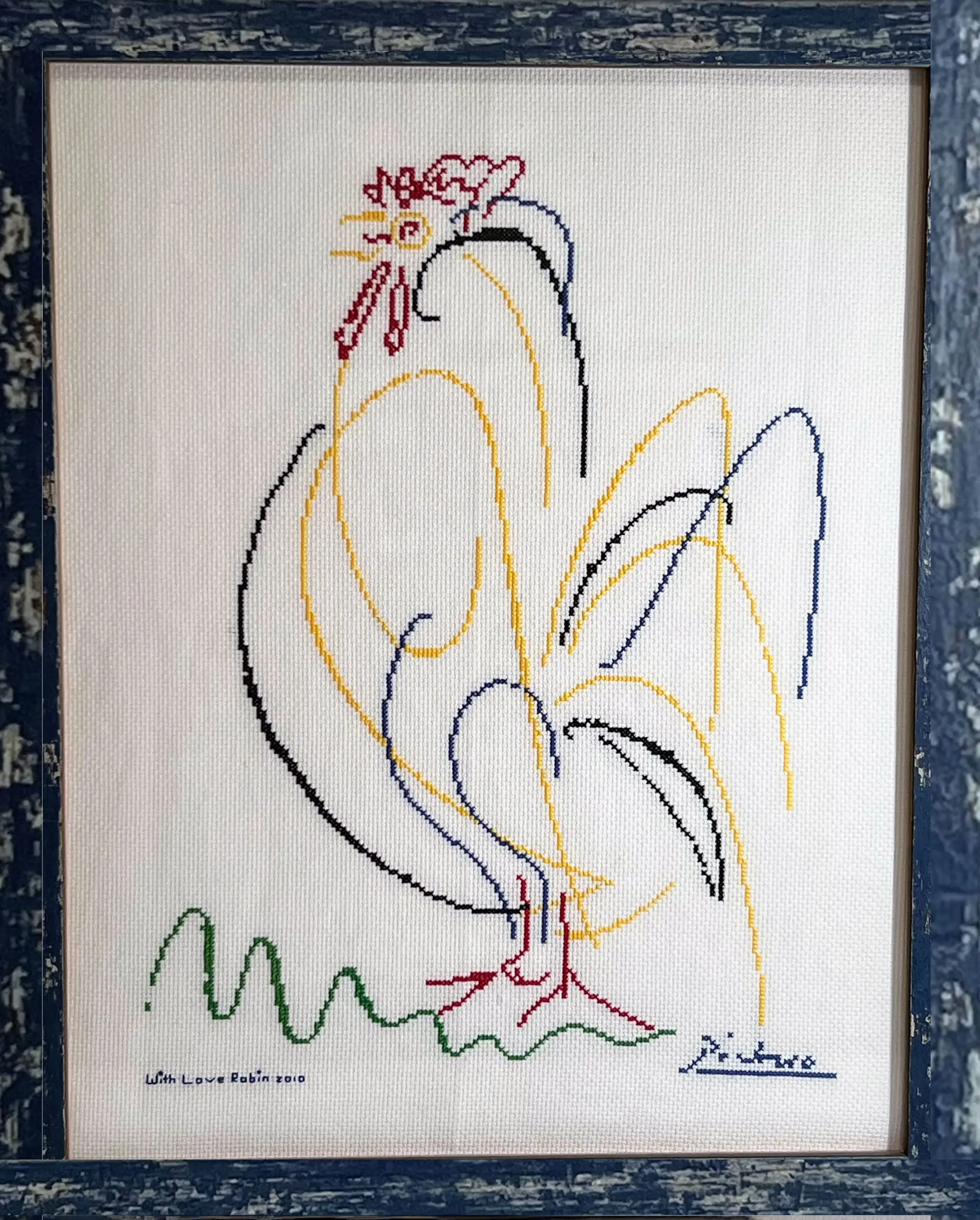
Chicken Cross Stitch
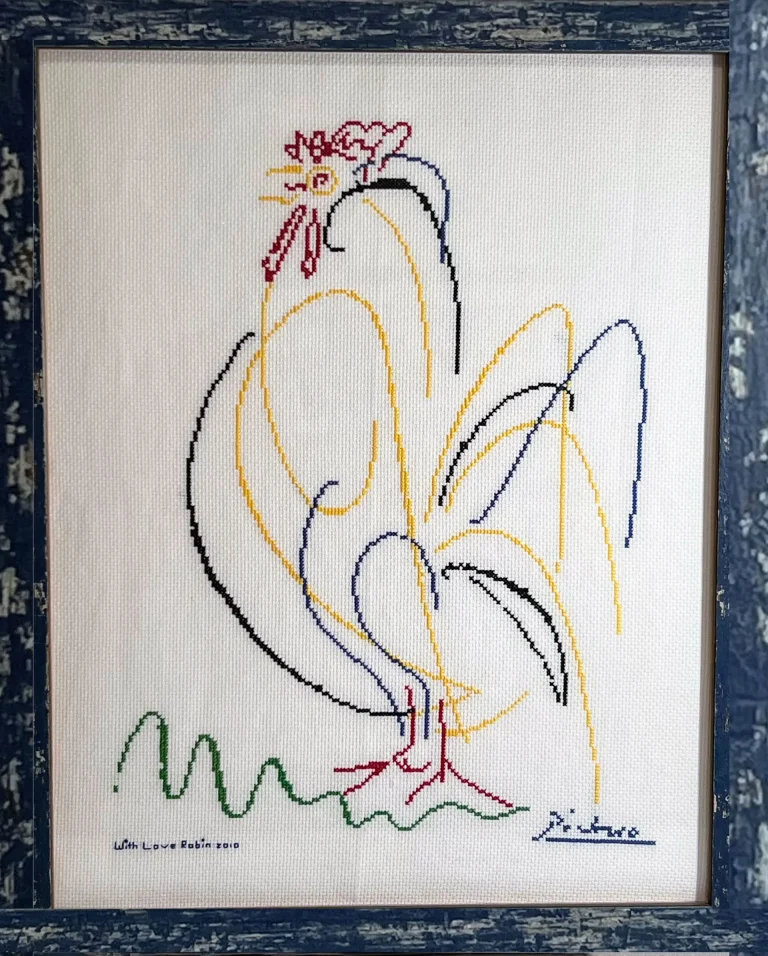
Many years ago, my husband took me to Paris on a business trip. We went to the Picasso Museum, where I gave him a bit of an art history lesson about the many periods of Picasso's work. In his sketchbooks, he would meticulously draw the same thing repeatedly to practice scale and line — one sketch was of a chicken.
This cross stitch is a copy of that piece, given to my husband with love.
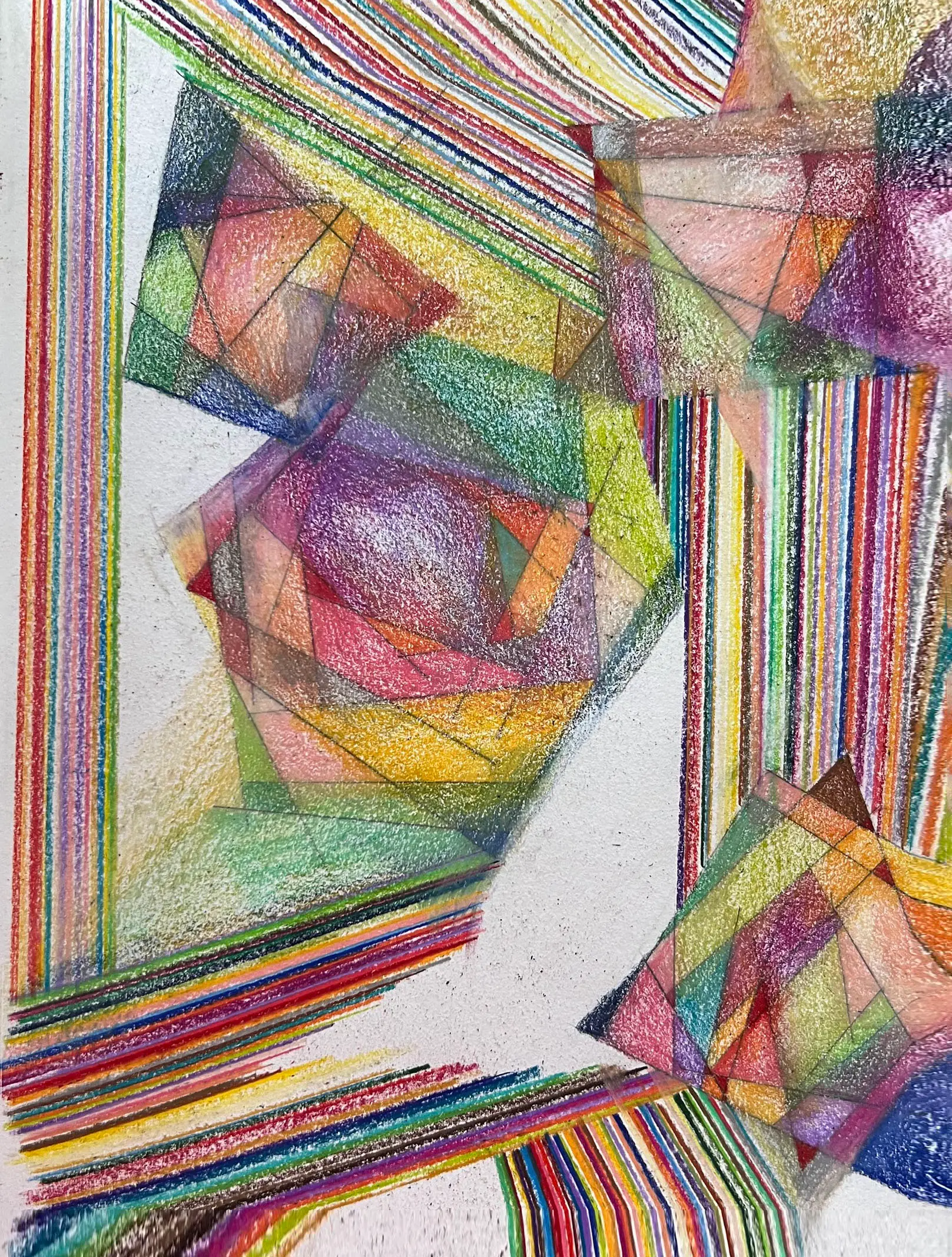
Colored Pencils
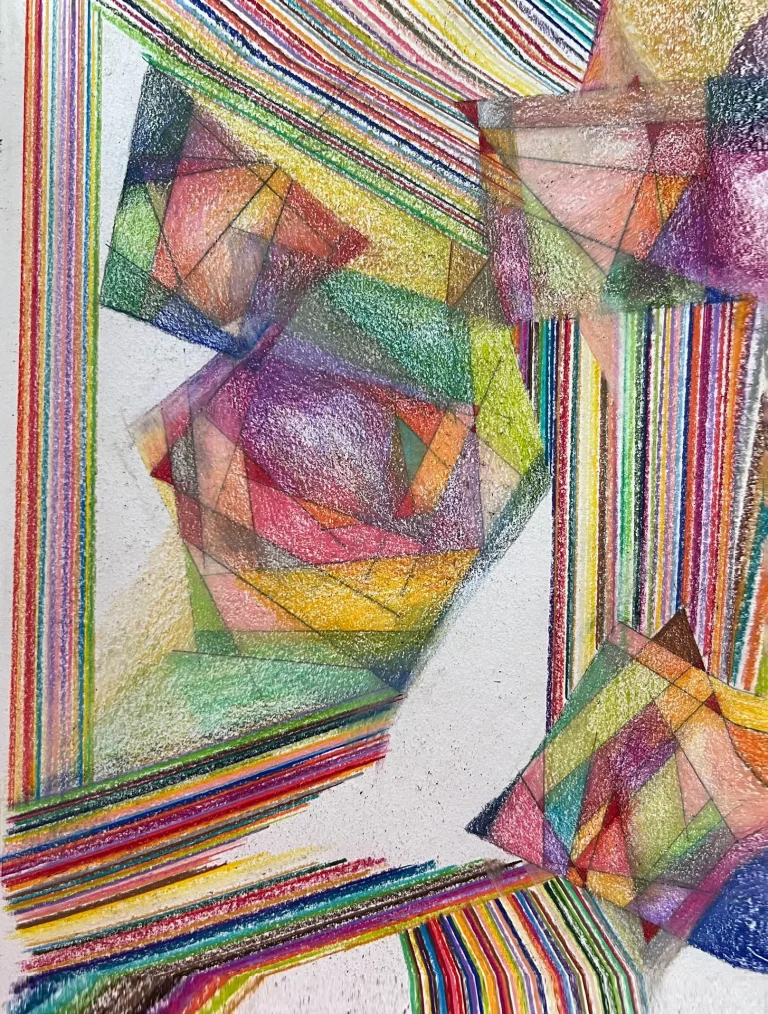
Shapes and line — what a colored pencil can do. Reading drawing books for practice often brings back memories of art school. This was an exercise in using colored pencils: first I drew shapes with pencil, then used shading and color mixing to fill them in, building a shape that takes on other shapes — a shape within a shape.
The composition wasn't sound on its own, so I kept drawing lines in a variety of colors to see the juxtaposition of colors, and to see what one can express with a line.
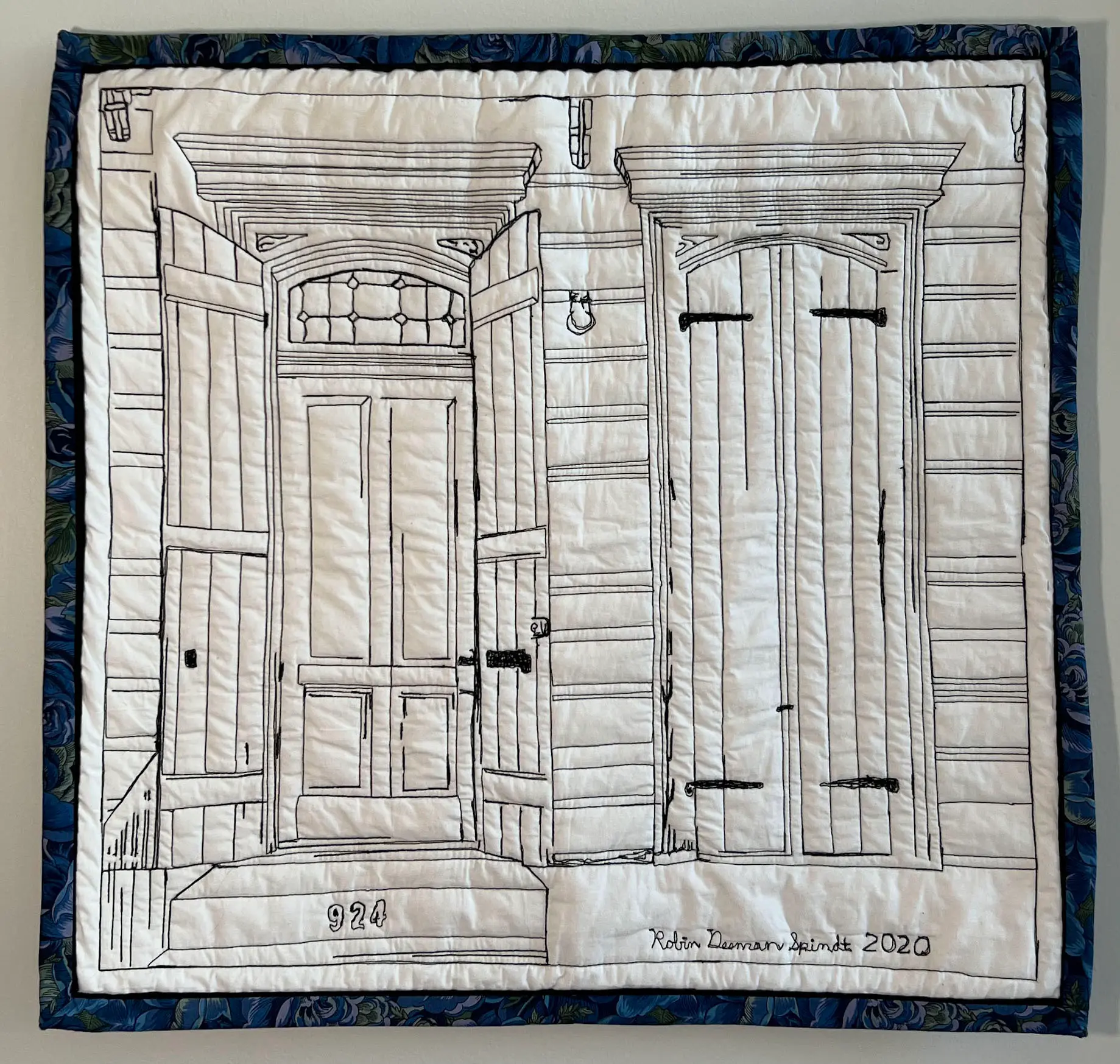
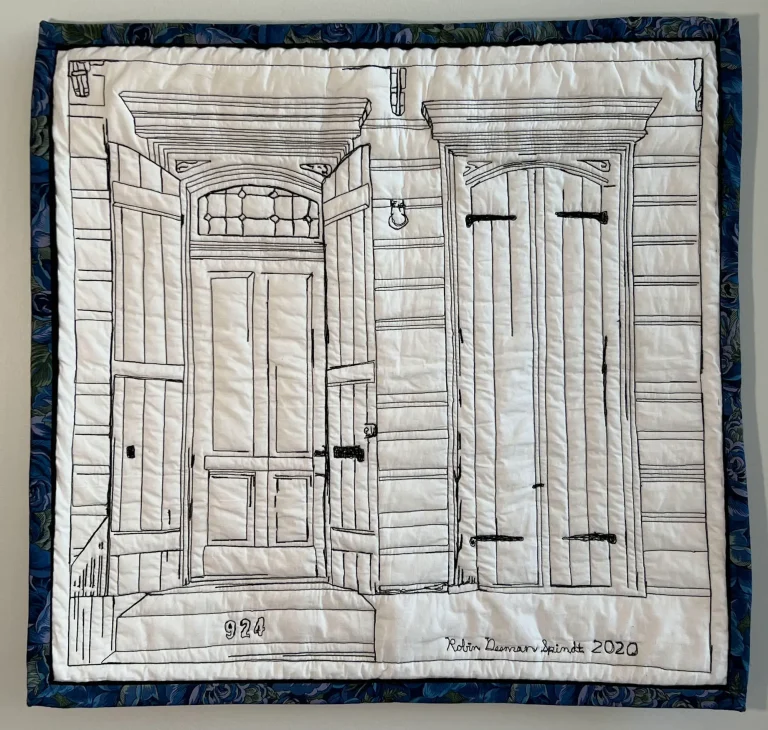
Pink Ladies
Pink Ladies is a photograph by Trent Bender, a barber in New Orleans with a tremendous eye — an old friend from NOLA. I asked him if I could use his photo to create my quilt. In his original photograph, the buildings were pink, hence the name Pink Ladies.
The quilt and the photo memorialize some of the brilliant architecture you find while walking around New Orleans. I drew the design on whole cloth and then stitched it free motion onto the surface of the quilt sandwich.
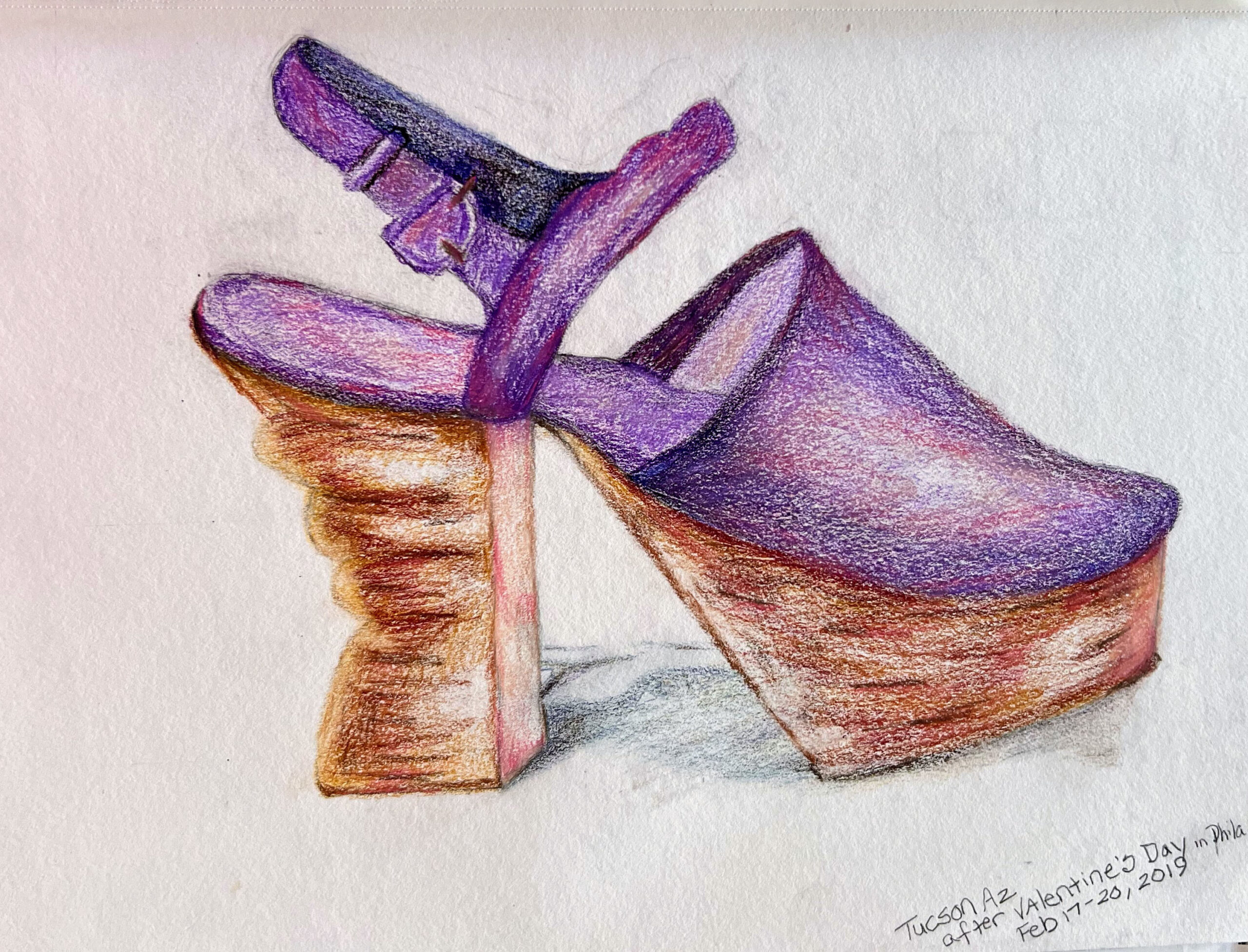
Shoe
This drawing was based on a photograph in the Sunday Style section of the New York Times. I challenged myself to use the picture as a guide to create the shoe drawing. Drawing shoes is surprisingly difficult, for many reasons.
I used colored pencils, along with this technique, to add volume, color, and detail to the shoe's rendering. The drawing took several weeks to finish because of its complexity.
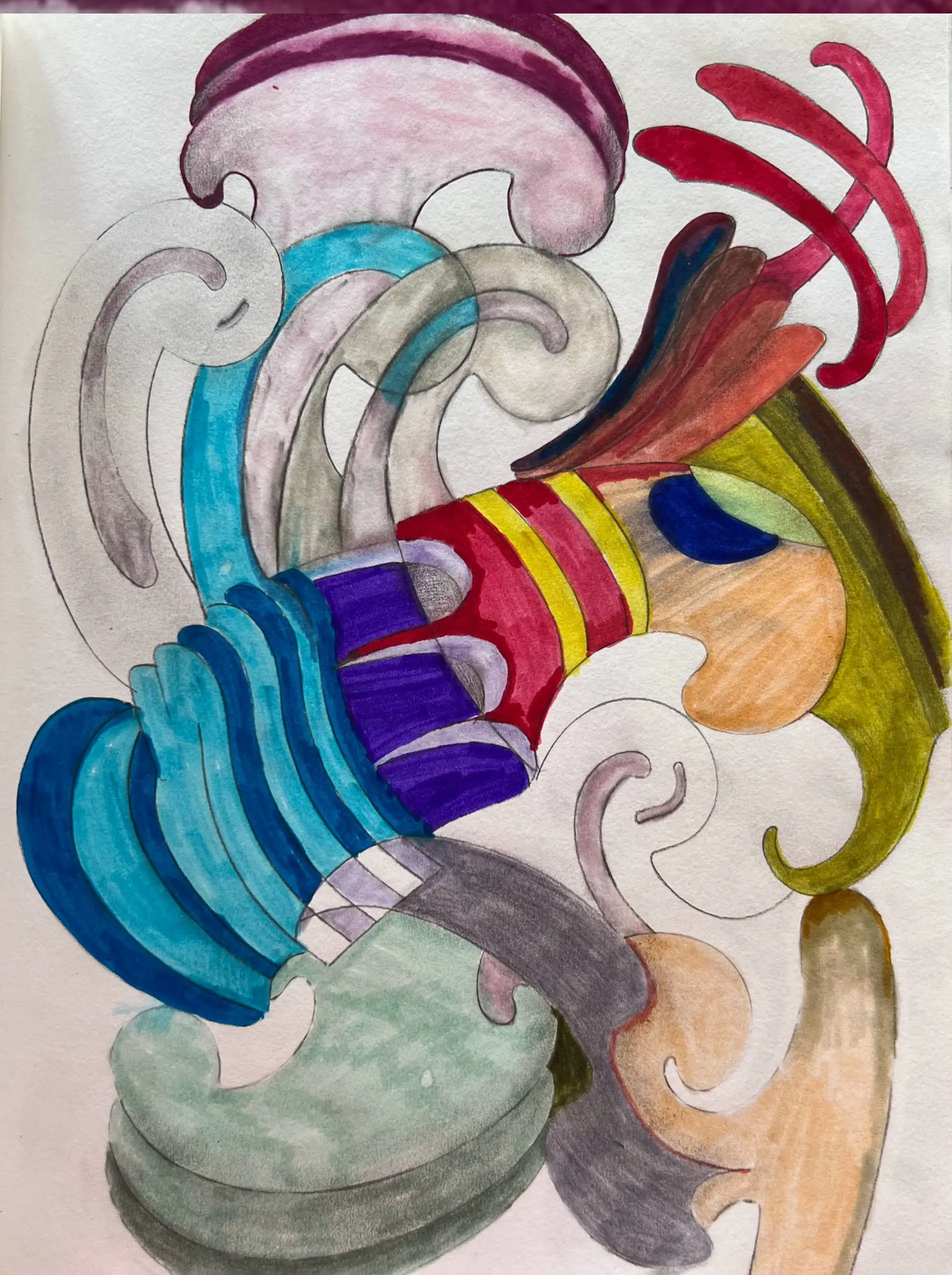
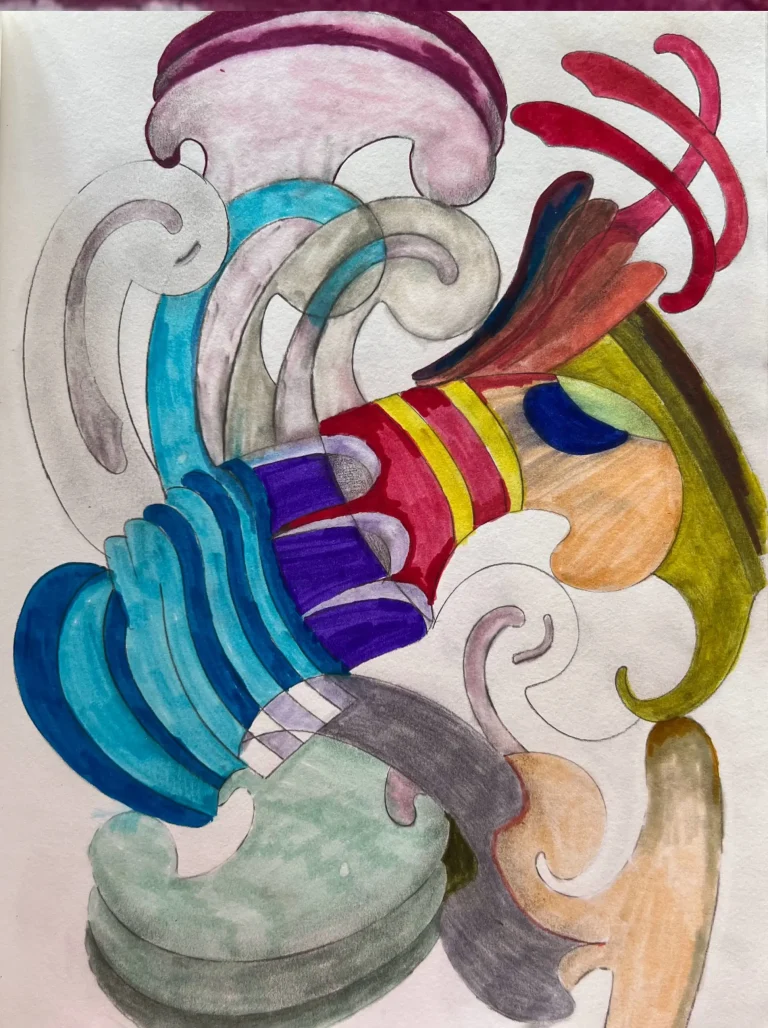
Smoothe Curve
I began this drawing in pencil using a French curve. Once the composition felt agreeable, it seemed to need color. I had been testing magic markers in my sketchbook and found a pleasing combination.
The feel of the markers on the paper enamored me — it looks almost like velvet.
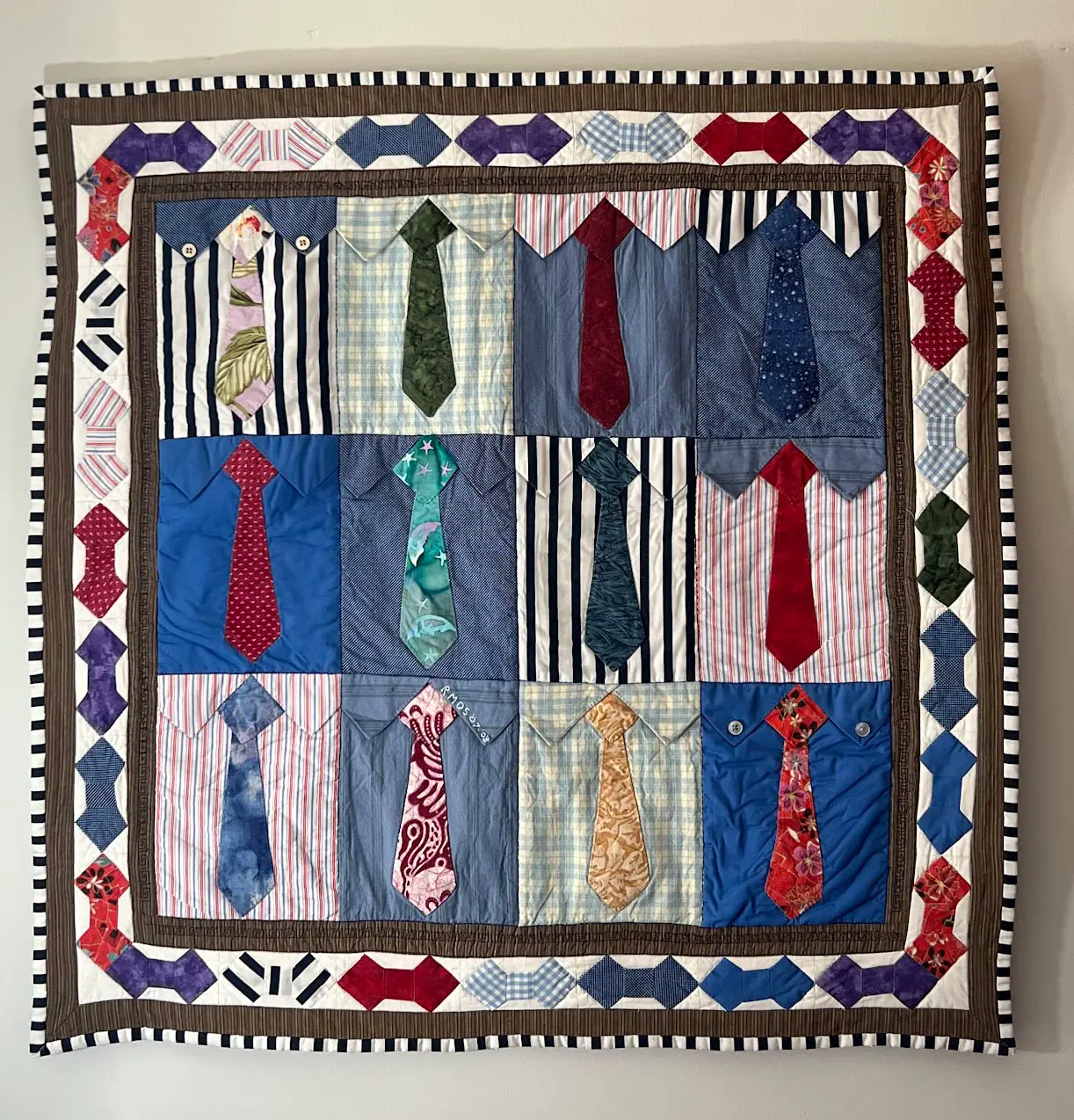
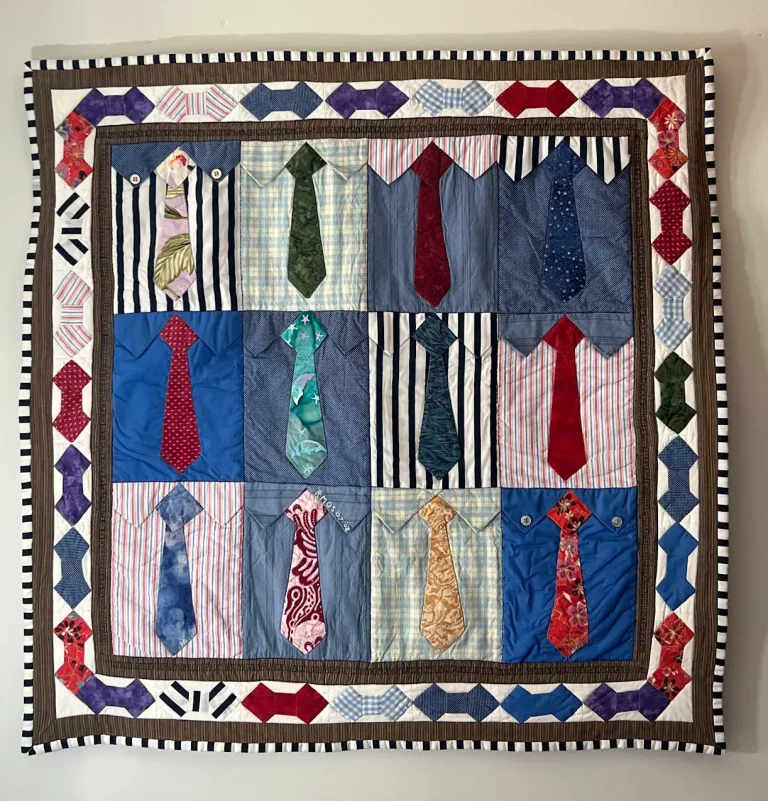
Tie Quilt
It was my husband's birthday, and I wanted to make him something meaningful. I found this quilt pattern in Quick Quilts From the Heart by Fons and Porter — the project titled Dad's Still Not Conservative. Since my husband wore Jerry Garcia's ties to work, I thought it was perfect.
I used crazy fabric from my stash to make each tie wild. Piecing the quilt's bow tie border presented a significant challenge. Once completed, it emanated love and hung in his office at Tulane University until he retired in 2021.
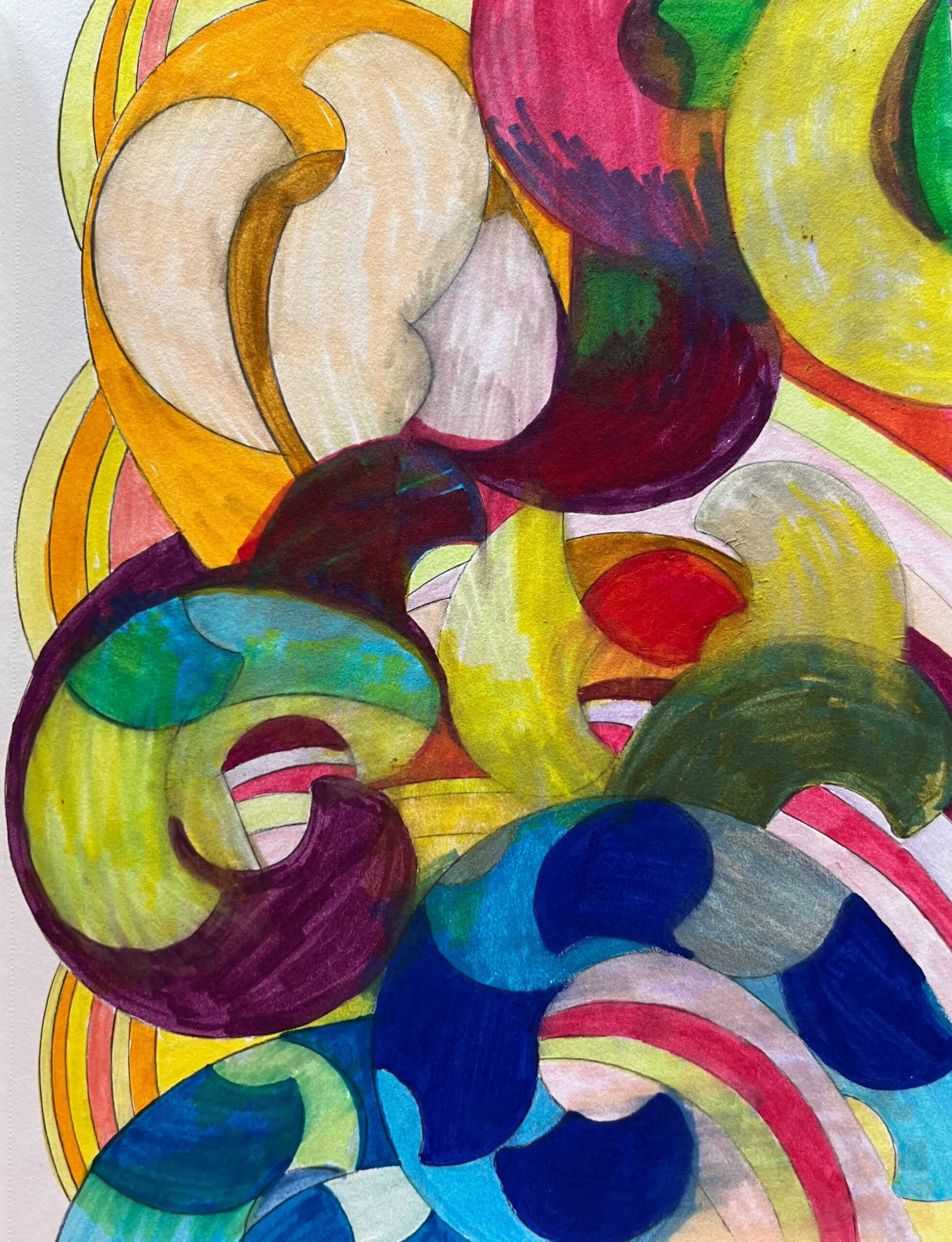
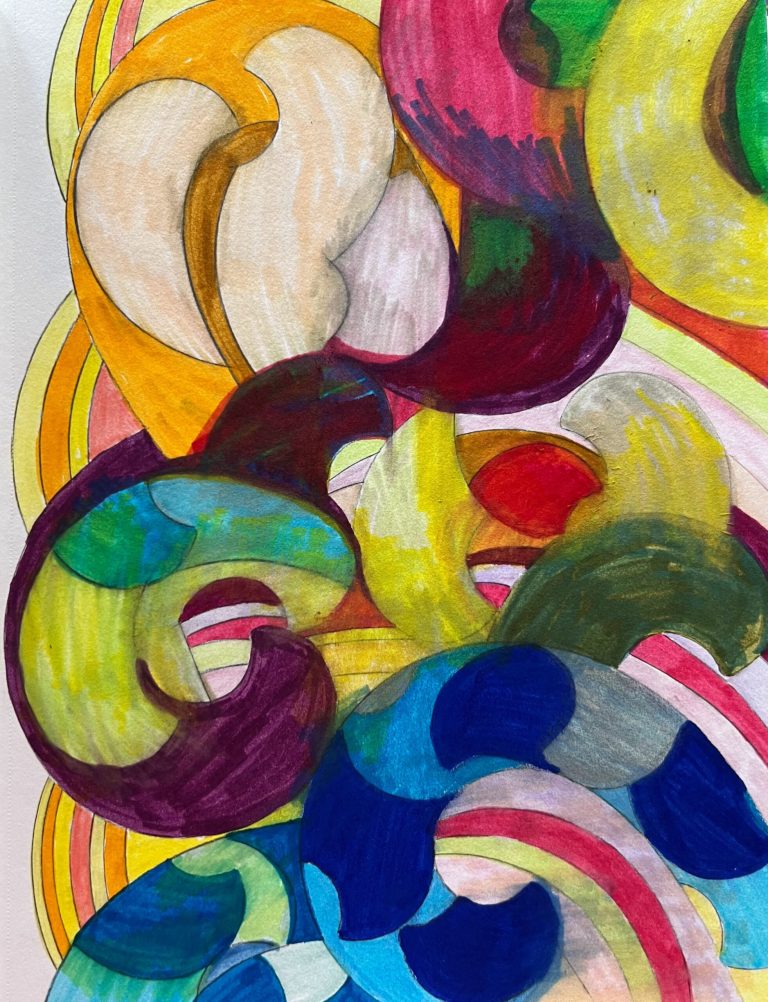
Velvet Curves
After finishing Smoothe Curve, I loved the feeling and texture of the drawing enough to want to make another — using the same technique of a French curve to build a pleasing composition.
I again used markers and color, producing something that evokes a sense of added dimension. Once more, I love the look the markers make on the paper. It feels like velvet.