To Schnoor or Not to Schnoor
Long ago in a land far away, a girl had no chance in the Philadelphia Public School System because she had an undetected learning disability called dyslexia. New math and new reading provided nothing but confusion to the poor lass. The only subjects she could master were drawing and art skills, things related to thread and yarn like embroidery and knitting, and music. But traditional scholastic subjects baffled her. In those days, multiplication was like some kind of magic trick.
She tried her hand at working in a grocery store, but soon realized this was not her dream. She never made it past being a bagger. In those days, the cashier had to know math and memorize the fruits and vegetable tables, unlike today, where it is all computerized with scanning bars.
Once more, she pursued an academic life. A very mean art history teacher took her under her wing and had her tested only to realize the poor maiden had dyslexia. The mean teacher, Jacqueline Brown, turned into a queen and saved the poor young woman’s life. She seemed like a daydreamer to most, but her art and style hinted at uniqueness.
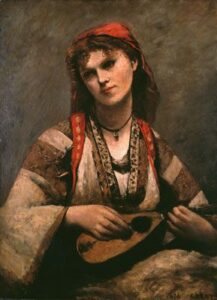 Camille Carot -The Barbizon School
The young lass got her bachelor’s degree in painting and sculpture and studied jewelry making at Tyler School of Art. After acquiring some skills and an apprentice or two, she made jewelry. Then she had to learn the art of business and how to sell her crafts.
One day at a craft show, she was selling her jewelry when a man and woman came into her booth looking at her wares. The man said, “How hard is it to do this? I bet I could make these.”
She asked the kind sir, “And what do you do for a living?”
“Why I am a brain surgeon.”
“Oh,” she responded. “I bet if I went to medical school and had seven years of practice, I too could become a brain surgeon.”

The couple left the young artists’ booth in a huff. There is a bias towards the arts that they are easy. Only people who have studied biology, organic chemistry, and those hard subjects can be professionals. In a similar vein, those who are businesspeople who have studied calculus, statistics, and accounting can become business moguls.
Serious musicians often begin at a young age, practicing instruments and learning scales. The artist begins by learning drawing and design principles and practicing those skills. The uninitiated would say, “Can’t you just teach me how to doodle?” I don’t need all that other stuff. That’s tantamount to saying to a surgeon I’ve watched you twice; can I cut your next patient open? That would be fun!
When people found out the young lass could sew, they’d ask, “Can you repair a zipper for me? Can you hem my pants?” They think the artist, or sewist, sits by with nothing to do. You wouldn’t go to a doctor friend and say, hey, can you tell me why this blood is dripping down my face at a cocktail party, now would you?
Experience has revealed that an educated individual might believe an artist’s talent is innate, overlooking the rigorous time, persistence, and practice their professional counterpart dedicates. This thinking mitigates the professional artist’s journey.
The young lass, a recipient of the queen’s salvation, pursued higher education and later learned of her brain’s untapped potential. Her mastery of calculus paved the way for her to achieve a terminal master’s degree in business. The fair maiden helped many start-ups reach millions of dollars in sales, either through consulting or businesses of her own.
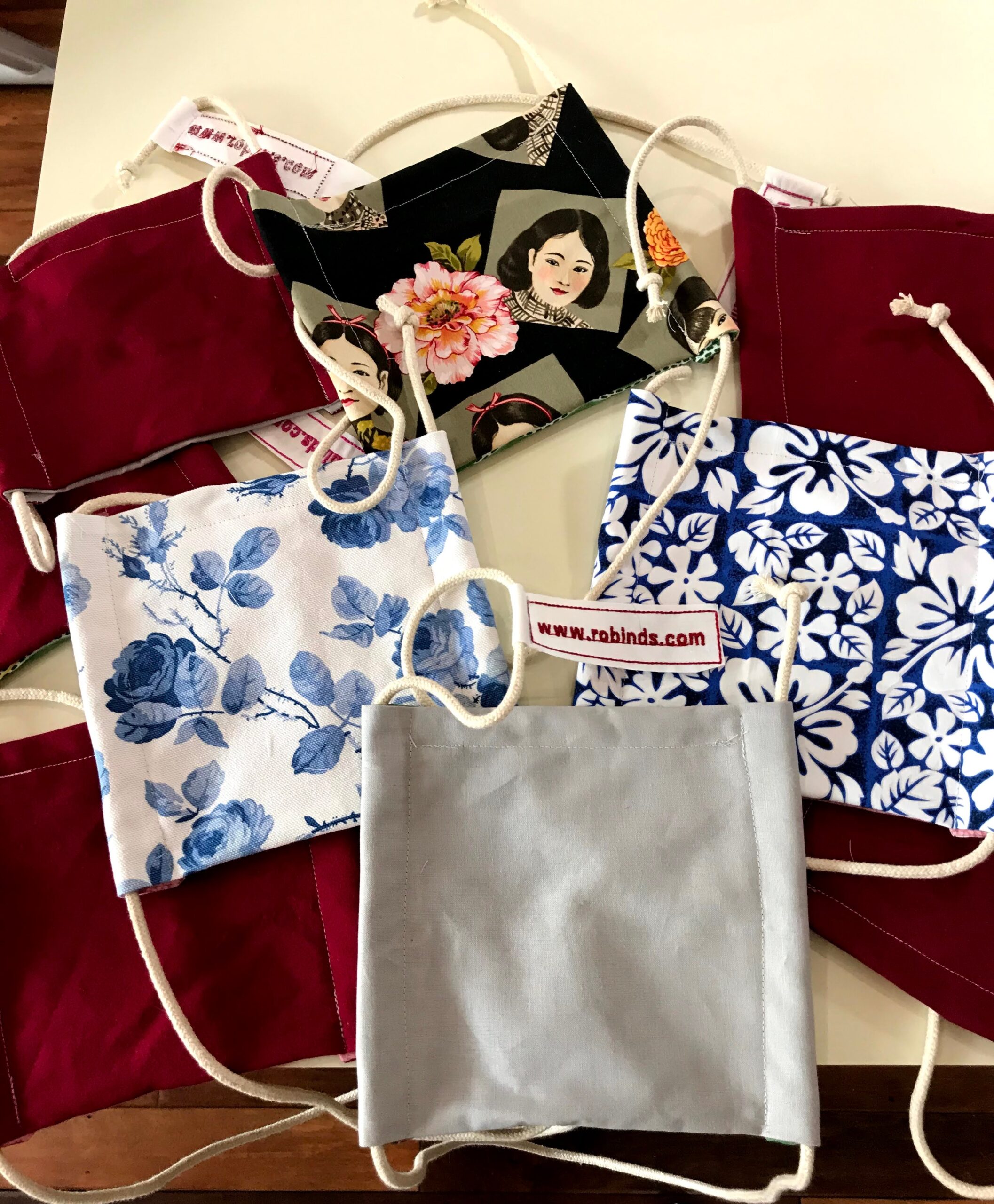
When Covid arrived, a doctor friend asked her for a favor. “Can you make masks with my logo on them?” Incidentally, this is called to Schnoor a favor. Much like Wimpy in the Popeye cartoon, when he said, “I will gladly pay you tomorrow for a hamburger today.” The restaurant owner knew he would never see the money but was kind enough to serve good old Wimpy, anyway. The fair maiden produced over fifty face masks for the doctor and sent personalized ones for each of his family members. Using her fabric, her thread, the wear and tear on her very specialized embroidery machine, not to mention hours of her time.
Now the good doctor has a skin treatment that is supposed to be a cure for aging skin. The maiden, wanting to remain fair, asked the good doctor, “May I try this?”
“I can give you my friend and family discount.” He spoke in a most adorable manner.
She looked at the bill after the discount, and it was still a large amount. The good doctor didn’t even think it was reasonable to offer her the product at cost, after all her resources he used of her sewing supplies. What’s up, doc? How about a little quid pro quo: my time, my sewing supplies?
One day the lady of sewing was in her studio embroidering something with her machine. For those uninitiated to the modern sewing machine, the price is like that of a fine luxury car. That’s because the sewing machine of today is a computer and can perform things your mother’s sewing machine could not. The lady of sewing maid arrived and brought her two large beach towels. “Can you embroider these for me?” She offered her employer, the pleasant lady, not a cent. It took several hours of programming, setting the embroidery design, and then the sew out which each took more than one hour. Plus, all the maiden’s sewing supplies. Picture large, monogrammed letters on a beach towel. The price would have been the moral equivalent of a maid’s pay for one day. But the maiden felt it unfair to ask that of her, knowing it was too expensive, and the maid made no offer of payment. The maiden told her dear maid, “Here are the towels, but please don’t ask me ever again.” The maid makes the most amazing tamales that no store could ever replicate. She has no problem asking the maiden to pay for those tamales.

The maiden artist’s studio is alive with projects in early stages, flourishing, or completed. A list of things she desires to make even longer. Suffice to say, she doesn’t need to hem pants, nor make masks, or embroider a logo on your golf shirt, unless, of course, you pay her. Commissions are always welcome!
The moral of the story is that an artist is no less complicated in their study to become proficient in their artistry, whatever their discipline may be. The rigors are the same as any other “professional”. However, the lore somehow confuses that art is easier, simpler, or God-given. Time to break this myth. To be lucky enough to have a talent requires years of practice and learning basics, like drawing, design, color theory, composition, and three-dimensional design. This list is the rudimentary beginning. You wouldn’t ask a doctor, lawyer, or candlestick maker for free services. Nor would you ask the economist for free stock tips, nor should you. Still not a believer? Next time you go to the doctor, let’s have him or her move over and let the artist and fair maiden listen to your heart and give you your next shot.
Ask me-
- What is the relevance to the Camille Carot artwork?
- Why a CM17? I was a Brother girl for twenty-five years!
- Any sewing questions?
- What I am working on now
What I’m reading now-
I Always Loved You by Robin Oliveira – sorry couldn’t finish it
Wondering how you could make a great period of art history any slower?
Eternal by Lisa Scottoline – a very sad story brought to life about a terrible chapter in Italy’s history during WWII
Destiny of the Republic by Candice Millard – A tale of Madness, Medicine, and the murder of a President – only on Chapter three the writing is brilliant
New News – It’s finally Happening
Coming Soon! My book – We’re Screwed
Have questions? Feel free to contact me at robin@robinds.com